 Cities and countries
 Mythology
 French engraving
 About Us
 Digital copies
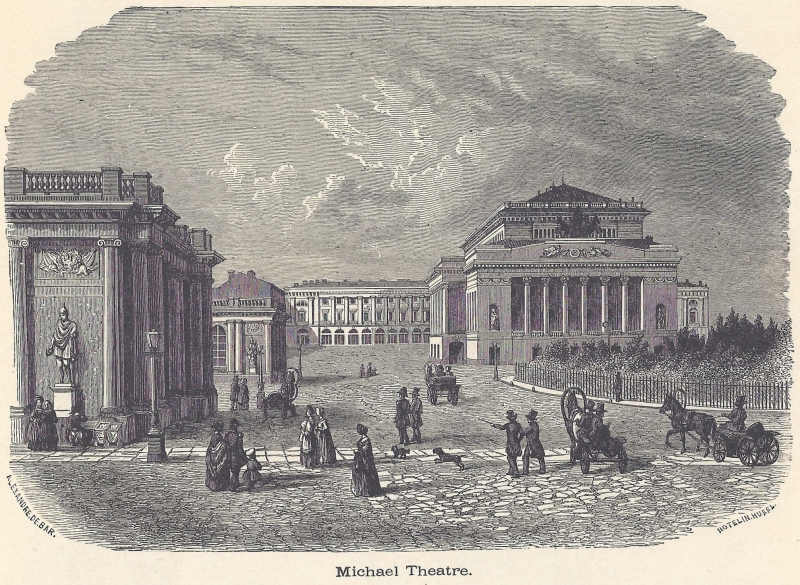
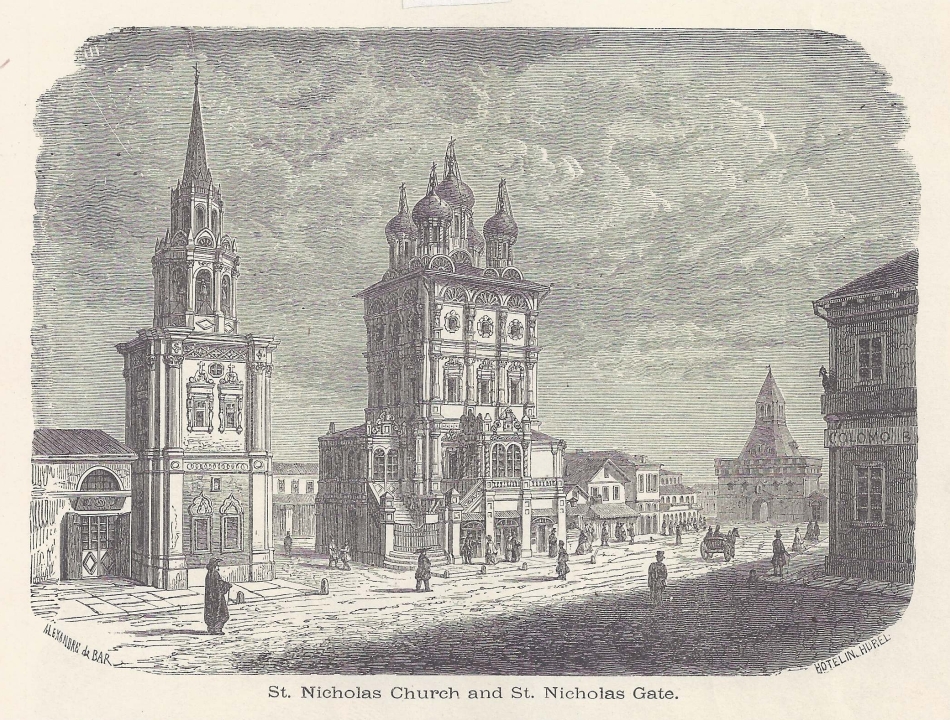
Laurent Éloi Hotelin (July 21, 1826, Vallant-Saint-Georges — September 1894, ibid.) was a French wood engraver and one of the leading masters of 19th-century book illustration.
Hotelin was born in Champagne. He received his initial training in engraving from a certain Caillois, then in 1844 joined the famous Parisian workshop ABL, founded in 1832 by John Andrew, Jean Best, and Isidore Leloir . This workshop, located on Rue Jacob, specialized in wood engravings and was one of the main centers of book illustration in Paris.
In the early 1850s, Hotelin became a partner in the workshop. Works from this period were signed with the monograms ABLHR, BLHR, or the name "Best, Hotelin et Cie", depending on contracts with other engravers such as Isidore Régnier . After separating from Best, Hotelin continued working with engravers like Octave Jahyer, Alexandre Hurel (from 1862), and Alfred Louis Sargent.
Hotelin remained faithful throughout his life to the magazine "Le Magasin Pittoresque", for which he created numerous illustrations. He also actively collaborated with other leading periodicals of the era: "Le Tour du Monde", "Musée des familles", and "L'Illustration".
In 1871, he created illustrations for the book "History of the War Between France and Prussia 1870-1871" (Histoire de la guerre entre la France & la Prusse 1870-1871), written by officer E. F. Rome. The edition, published by the Librairie nationale du Siècle in Paris, contained about one hundred full-page engravings and went through several reprints.
A special place in Hotelin's work is occupied by the interpretation of drawings by great artists. He engraved works by Gustave Doré, Alexandre Bida, Charlet, Albrecht Dürer, Eugène Delacroix, and other masters . In 1863 and 1879, he exhibited his engravings at the Paris Salon.
After his active career, Hotelin retired to his native Vallant-Saint-Georges, where he owned a house. He died there in September 1894.
Works by Laurent Hotelin are held in major international collections, including the British Museum and the Fine Arts Museums of San Francisco. His name is forever linked with the golden age of French wood engraving, when the technique reached unprecedented technical perfection and became the primary means of reproducing illustrations in books and magazines.