 Cities and countries
 Mythology
 French engraving
 About Us
 Digital copies
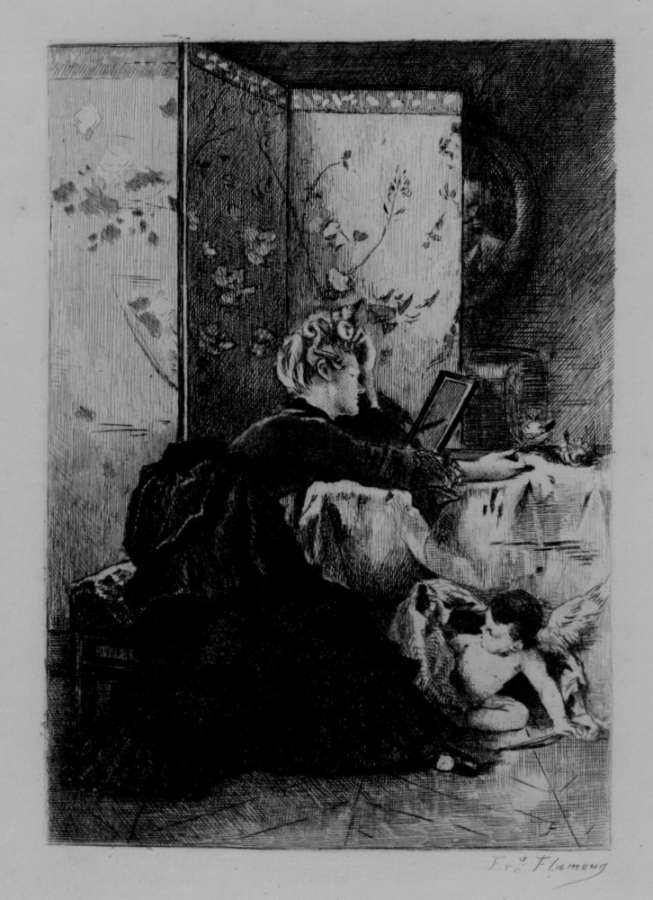
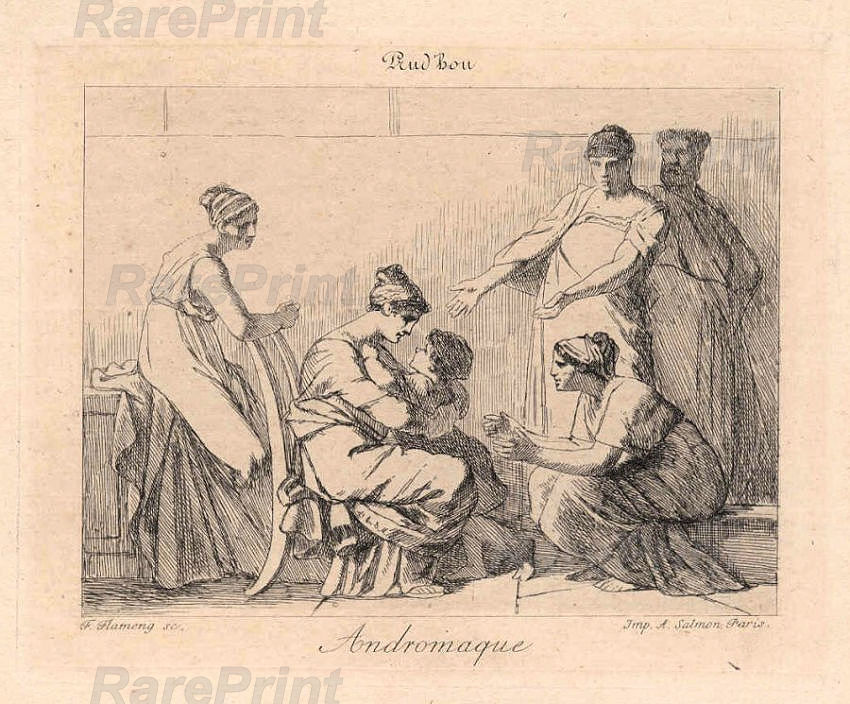
François Flameng (1856–1923) was a highly successful French painter during the last quarter of the 19th century and the first quarter of the 20th. The son of a celebrated engraver, Léopold Flameng, he received a first-rate education in his craft, mastering both painting and the graphic arts from an early age.
Flameng initially gained renown for his history painting and portraiture, becoming a professor at the prestigious Academy of Fine Arts (Académie des Beaux-Arts). He decorated such important civic buildings as the Sorbonne and the Opéra-Comique, and also produced advertising work, demonstrating his versatility as an artist. His portraits of high society and historical scenes, often depicting the French Revolution and the Napoleonic era, were celebrated for their meticulous detail and dramatic flair.
Flameng was granted France's highest civilian honor, the Légion d'Honneur, and notably designed the first French banknotes, a testament to his skill as a draftsman. He was also made an Honorary Commander of the Royal Victorian Order in the 1908 Birthday Honours, recognizing his contributions to Anglo-French cultural relations. In his later years, Flameng gained renewed acclaim for his powerful paintings of World War I. Commissioned by the French government, he created over 200 sketches and drawings from the front lines, documenting the harsh realities of trench warfare with unflinching honesty. These works, which blend journalistic immediacy with artistic sensitivity, are considered some of the most poignant visual records of the Great War. He was named honorary president of the Society of Military Painters and an accredited documenter for the War Ministry. In 1919, he was elected into the National Academy of Design as an Honorary Corresponding Academician, solidifying his international reputation. Flameng's legacy endures not only in his elegant portraits and historical canvases but also in his haunting images of conflict, which continue to be studied and exhibited as powerful testimonies to the human experience of war.