 Cities and countries
 Mythology
 Belgian engravers
 About Us
 Digital copies
Hippolyte de la Charlerie (1827, Mons – 1869, Ixelles) was a Belgian painter, draughtsman, and engraver who worked at the intersection of pictorial tradition and book illustration. He was a versatile master, creating both easel paintings and original engravings for collectors' editions.
De la Charlerie was born in Mons. He received his artistic education at the Royal Academy of Fine Arts in Brussels (1843–1851), where he studied under Théodore Baron . Together with like-minded artists, he co-founded the Brussels workshop Atelier Saint-Luc, which united young artists.
He spent a significant part of his short life in Paris, where he found his true calling—book illustration. He worked on luxurious editions for collectors, creating both drawings for engravings and the engravings themselves.
Hippolyte de la Charlerie belonged to those masters who equally mastered both the brush and the burin. His works demonstrate a rare combination of pictorial thinking and graphic precision.
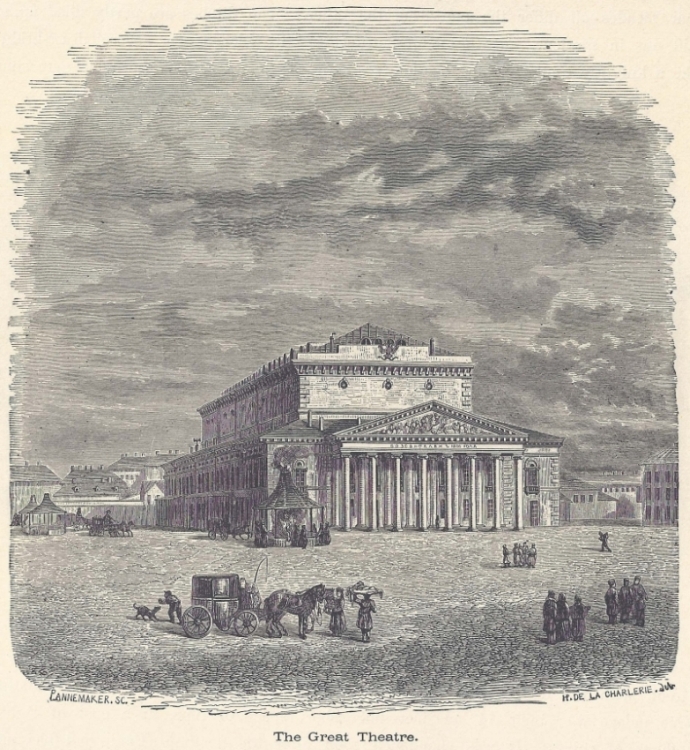
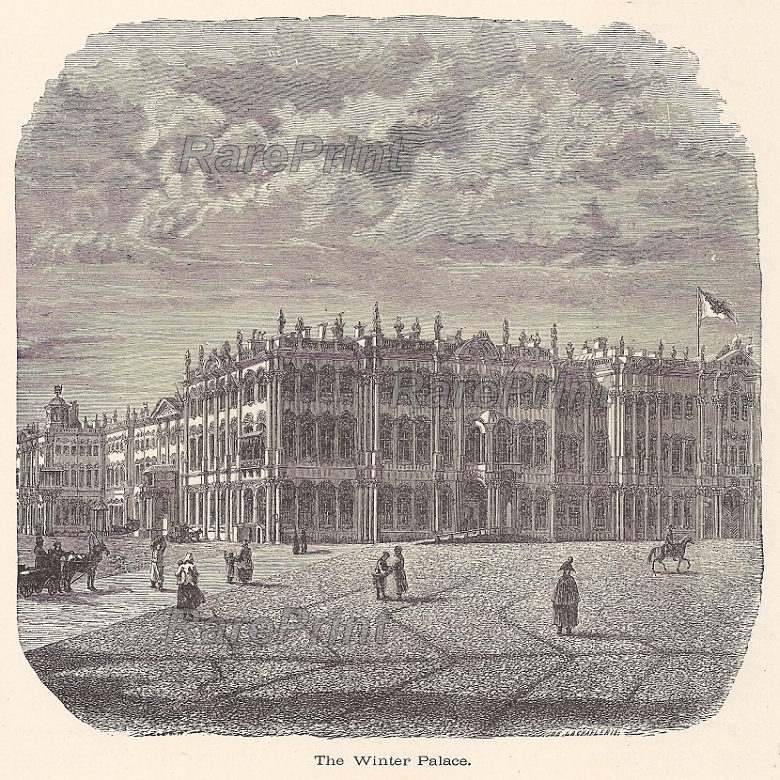
Among his most significant works is a series of engravings dedicated to scenes of the French Revolution, created for the book "La Révolution Française" (1862) by M.J.G.D. Armengaud . These prints are distinguished by their drama and historical accuracy, indicating the artist's deep study of the subject matter.
As a painter, he also achieved recognition. His painting depicting the composer Jean-Baptiste Lully in his childhood was highly successful at the Paris Salon of 1869. The canvas captures the moment when the future creator of French opera, as a twelve-year-old boy, plays the violin in the kitchen of the Duchesse de Montpensier, his patroness.
In 1868, de la Charlerie became a founding member of the avant-garde "Free Society of Fine Arts" (Société Libre des Beaux-Arts), which opposed academic routine and proclaimed the ideals of sincerity and freshness in art . Unfortunately, he lived only one year after the society's foundation, dying in 1869 in Ixelles, a fashionable suburb of Brussels favored by many artists .
Posthumous recognition came to him in 1905 at a retrospective exhibition of Belgian art. The renowned critic Octave Maus, writing in L'Art Moderne, praised him among unjustly forgotten painters whose works evidenced "freshness and sincerity"—the very qualities valued by the society he had co-founded.
Art historians note a particular style in his portraits, characterized by an "austere simplicity." De la Charlerie used dark, cool tonalities to emphasize the model's immobility and inner concentration, creating images full of psychological depth. This same rigor and nobility of line can be traced in his engravings, where detailed execution combines with an overall monumental composition.