 Cities and countries
 Mythology
 Books and Magazines
 About Us
 Digital copies
"The Illustrated Globe Encyclopaedia of Universal Information" is a monumental reference work published by the renowned Edinburgh firm A. Fullarton & Co. in the late 1870s. Edited by John M. Ross, LL.D. , this comprehensive encyclopaedia represents the pinnacle of Victorian-era publishing, combining scholarly ambition with lavish illustration. The encyclopaedia was issued in multiple editions between 1877 and 1880. The first UK edition appeared in 1877, published by A. Fullarton & Co. with offices in London, Edinburgh, and Dublin . Subsequent editions followed in 1878, 1879, and 1880, indicating the work's popularity and commercial success. The complete set comprises 12 volumes, each measuring approximately 268mm x 218mm and containing around 300 pages per volume — a substantial work weighing about 12.5kg in total. The encyclopaedia was produced as a high-quality reference work intended for serious collectors and libraries.
The binding features:
Brown cloth hardback with leather spine and corners.
Raised bands and gilt titles on spines.
Marbled edges to text blocks.
Gilt embossed boards.
Gilt edges on some editions.
The books were professionally bound, with some copies bearing bookbinders' stickers from establishments such as W & G Baird, Belfast. True to its name, "The Illustrated Globe Encyclopaedia" is renowned for its high-quality illustrations and cartographic content.
Each volume contains:
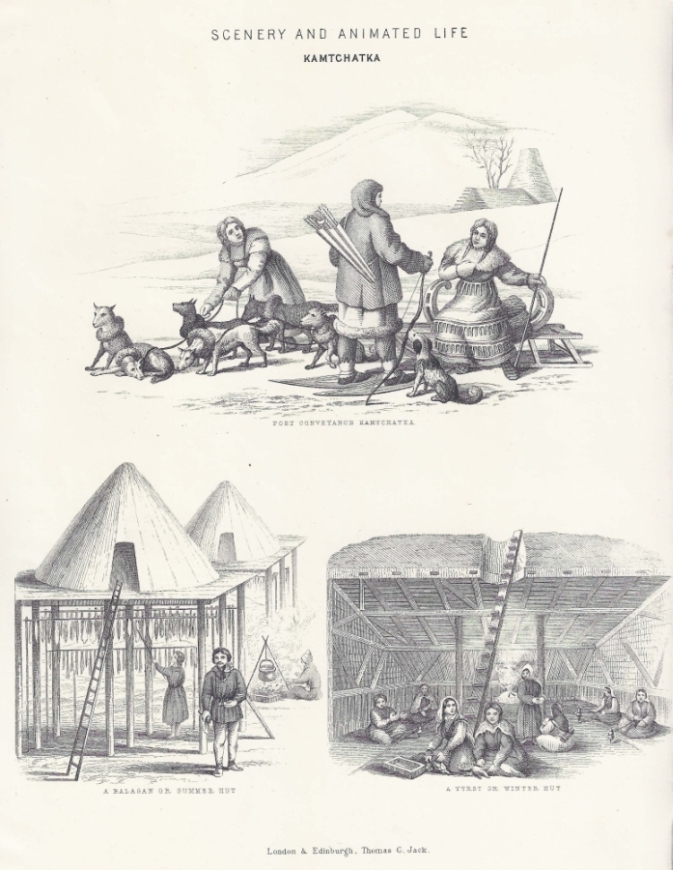
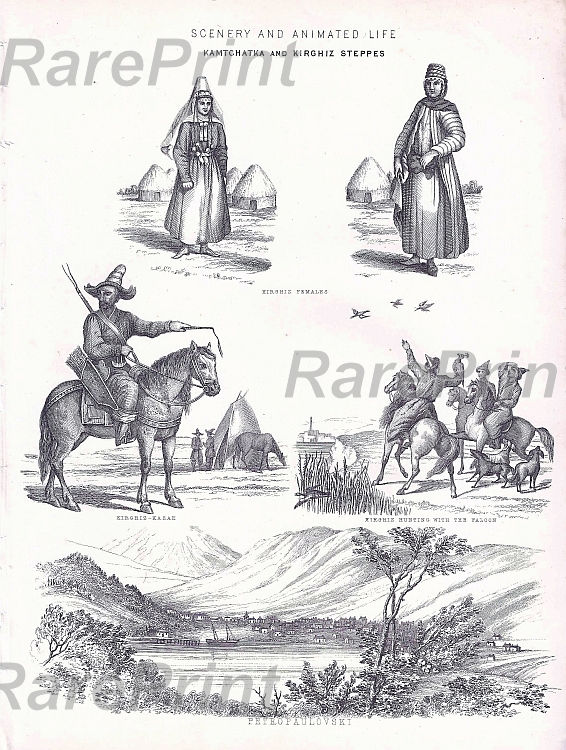
Engraved plates — detailed illustrations accompanying the text.
Fold-out colour maps of major cities and regions, including: London, Paris, British Isles, France and Switzerland, Asia, Africa, North America, South America, India, Australia, and Austro-Hungary.
Portraits of notable figures.
Chronological tables and supplementary reference material.
The inclusion of separate colour maps for cities like Liverpool, Bristol, Dublin, Edinburgh, Manchester, and Norwich demonstrates the encyclopaedia's comprehensive geographical coverage.
The 12 volumes are organized alphabetically:
Vol. I A - BATHORI (1879) Fold-out colour map of London.
Vol. II BAT - CANNA (1879) Colour map of Paris.
Vol. III CAN - CURATOR (1880) Colour map of British Isles.
Vol. IV CURB - EZZELINO (1880) Colour map of France and Switzerland.
Vol. V F - GRUNDTVIG (1880) Colour map of Asia.
Vol. VI GRUNTH - KELLS (1880) Colour maps of Liverpool and Africa.
Vol. VII KELP - MONTCO (1880) Colour maps of Bristol and North America.
Vol. VIII [MON?] - PAS (1880) Colour maps of Dublin and South America.
Vol. IX PAS - RAMS (1880) Colour maps of Edinburgh/Leith and India.
Vol. X RAMS - SHEL (1880) Colour maps of Manchester and Australia.
Vol. XI SHEN - TRAI (1880) —
Vol. XII TRAJ - ZYMO (1880) Colour maps of Norwich and Austro-Hungary.
Each volume contains approximately 304 pages of text, supplemented by illustrations and maps. The work includes a preface, map section, and chronological table.
"The Illustrated Globe Encyclopaedia" represents a landmark in Victorian publishing for several reasons:
Comprehensive scope — covering universal knowledge at a time of rapid scientific and geographical discovery.
Illustration quality — demonstrating the high standards of 19th-century wood and steel engraving.
Cartographic excellence — with separately issued colour maps that were highly valued by contemporary readers.
Scholarly ambition — providing authoritative information to a growing middle-class readership.
Complete 12-volume sets of "The Illustrated Globe Encyclopaedia" are now uncommon on the antiquarian market.
For collectors of Victorian illustrated books and antique prints, this encyclopaedia remains a valuable source of high-quality engravings and a testament to the scholarly publishing traditions of 19th-centur.